Exploring Life’s Origins

| 209 Comments | 1 TrackBack

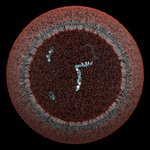
protocell.jpgThe PT Crew received an email, announcing a breathtaking website called Exploring Life’s Origins. The website displays in stunning graphics and video how scientists are exploring the origins of life. The graphics were made by an NSF Discovery Corps Postdoctoral Fellow named Janet Iwasa, in collaboration with Jack Szostak, and the Current Science and Technology team at the Museum of Science, under an NSF grant. The resources are available under a Creative Commons License which requires attribution, non-commercial use and no derivative works. The website explains in clear and accessible language how science envisions life arose on earth and explains the RNA world, which, despite the wishful thinking of some creationists, has not lost its relevance.

As I said, the site explores in stunning graphics and video, the timeline of life’s evolution, the relevance of the RNA world and how one would build a proto cell. The site will help educators as well as other interested parties explore scientific scenarios explaining how life originated and evolved on our planet and present them as part of a science curriculum to their students.

1 TrackBack

Entry TrackBack URL: http://pandasthumb.org/cgi-bin/mt/mt-tb.fcgi/3800.

I was perusing the Panda’s Thumb blog, and I came across this post. It turns out that a new website, called Exploring Life’s Origins, has just been opened by the American Museum of Science. It’s a very nice website that has various gr... Read More

209 Comments

AWESOME. Very nice. Superb. Lab + Media. That’s just how I like it. :)

Any bets on how long before some of the graphics / video show up in a creationist movie?

Thanks PvM.

Doubleplus good.

The site says that photosynthesis only evolved once? Is that accurate?

The geologic record thus offers strong evidence for the evolution of oxygenic photosynthesis before 2800 Ma. There are, however, hints of even earlier origins. The microfossil record of cyanobacteria may extend to 3300 to 3500 Ma (22), although the evidence for these early Archean occurrences is controversial (23).

Source NASA

Abstract

Between 1 and 1.5 billion years ago [1 and 2], eukaryotic organisms acquired the ability to convert light into chemical energy through endosymbiosis with a Cyanobacterium (e.g., [3, 4 and 5]). This event gave rise to “primary” plastids, which are present in green plants, red algae, and glaucophytes (“Plantae” sensu Cavalier-Smith [6]). The widely accepted view that primary plastids arose only once [5] implies two predictions: (1) all plastids form a monophyletic group, as do (2) primary photosynthetic eukaryotes. Nonetheless, unequivocal support for both predictions is lacking (e.g., [7, 8, 9, 10, 11 and 12]). In this report, we present two phylogenomic analyses, with 50 genes from 16 plastid and 15 cyanobacterial genomes and with 143 nuclear genes from 34 eukaryotic species, respectively. The nuclear dataset includes new sequences from glaucophytes, the less-studied group of primary photosynthetic eukaryotes. We find significant support for both predictions. Taken together, our analyses provide the first strong support for a single endosymbiotic event that gave rise to primary photosynthetic eukaryotes, the Plantae. Because our dataset does not cover the entire eukaryotic diversity (but only four of six major groups in [13]), further testing of the monophyly of Plantae should include representatives from eukaryotic lineages for which currently insufficient sequence information is available.

Monophyly of Primary Photosynthetic Eukaryotes: Green Plants, Red Algae, and Glaucophytes, Current Biology , Volume 15 , Issue 14 , Pages 1325 - 1330

For the uninitiated, casual observer I offer the pdf file of the Thaxton Bradley exposition on the various theories of abiogenesis, including the RNA World, protocells, et al that successfully reduces these arguments to fanciful fairy tales regurgitated every decade or so by the grasping at straws evos.

http://www.themysteryoflifesorigin.org/

One must realize that these illusions and fabrications have no bearing on reality, actual primal conditions, and are reflective of the other-world of academics so well presented by Tom Wolfe in his essay “The Intelligent Coed’s guide to America”, that I heartily recommend as a companion piece to the scientific material.

Oh and for the quite curious who need a paper to pull the flush handle on this regurgitation there’s Kenyon and Mills paper: http://www.arn.org/docs/odesign/od1[…]world171.htm

and in 1993, Schopf produced evidence of microscopic cellular organisms nearly 3.5 billion years old, opening the floodgates to research that is filling in the holes in how and when life evolved on Earth.

“Everyone had expected that early organisms would be smaller, simpler, perhaps less varied, but they were universally thought to have evolved in the same way and at the same pace as later life,” Schopf writes. “This turned out not to be true. That evolution itself evolved is a new insight.” The pivotal point in evolution’s own evolution was the advent of sex about 1.1 billion years ago. The first organisms to engage in sexual activity were single-cell floating plankton, which, unlike organisms that reproduced by asexual division, like human body cells, had a pore-like mechanism that permitted the release of sex cells into the environment. Data from the fossil record clearly show that at about that time there appeared many new types of species. Sex increased variation within species, diversity among species and the speed of evolution and genesis of new species - bringing about not only the rise of organisms specially adapted to particular settings but also the first appearance of life-destroying mass extinctions.

“The pre-sex world was monotonous, dull, more or less static,” Schopf explains. “But every organism born from sexual reproduction contained a genetic mix that never existed before.”

What we don’t pay much attention to is that for most of life’s history, the biosphere was unicellar and for ca. 2 billion years prokaryotes.

Schopf who is a leading paleobiologist claims that the early fossils of bacteria and blue green algae look almost identical to what we could find in the nearest pond or beach today. The oldest stromatolites look like the newest as well. From there he implies that they are more or less the same.

Not being a specialist in micropaleontology, I can’t really evaluate these claims. But it does look possible that evolution snail paced for 2 billion years, picked up with the eukaryotes, and took off with the new kids on the block, metazoans. Part of this might have been because for billions of years until the earth rusted, oxygen was very low. And part of it might have been that the prokaryotes reached local optimums and never had any reason to go any further. Until evolution provided more diversity.

Sadly enough origins of life research has moved forward since thebook was written although from a historical perspective it is educational to watch how people considered the problem of abiogenesis. Ignorance seems to be a powerful motivator for ID Creationists.

Thanks Keith for an interesting link although it does not really help your case.

PS: Keith, is Thaxton’s work the only origin of life research with which you are familiar? Do you realize that the science has made giant leaps?

Why are you afraid to look?

keith said:

For the uninitiated, casual observer I offer the pdf file of the Thaxton Bradley exposition on the various theories of abiogenesis, including the RNA World, protocells, et al that successfully reduces these arguments to fanciful fairy tales regurgitated every decade or so by the grasping at straws evos.

What a grand intellectual our troll Keith is. … . Single handedly, he has bought down all of modern science.

All that, without any demonstrated knowledge whatever of biology, chemistry, geology, or physics.

What a guy!

… I offer the pdf file of the Thaxton Bradley exposition on the various theories of abiogenesis.…

Thaxton Bradley? He was the first editor of the legally-proven fraudulent and dishonest tripe known as “Of Pandas and People.” Tell me, are there any transitional phrases in this text of his as embarrassing as “cdesign proponentists”? Apart from the no-doubt many deliberate misinterpretations of abiogenesis research Laxton provides there’s got to be some unintentional “Tard” in there in somewhere.

… Kenyon and Mills paper…

Ah yes, from the infamous “Origins & Design” pseudo-journal. It’s a paper, but then so is toilet paper. Do you have anything from a real science peer-reviewed journal that’s up-to-date and not based on (misinterpreted) information from fifteen years ago.

The site says that photosynthesis only evolved once? Is that accurate?

wikipedia:

Photosynthetic bacteria do not have chloroplasts (or any membrane-bound organelles). Instead, photosynthesis takes place directly within the cell. Cyanobacteria contain thylakoid membranes very similar to those in chloroplasts and are the only prokaryotes that perform oxygen-generating photosynthesis. In fact, chloroplasts are now considered to have evolved from an endosymbiotic bacterium, which was also an ancestor of and later gave rise to cyanobacterium. The other photosynthetic bacteria have a variety of different pigments, called bacteriochlorophylls, and do not produce oxygen. Some bacteria, such as Chromatium, oxidize hydrogen sulfide instead of water for photosynthesis, producing sulfur as waste.

Evolution Plant cells with visible chloroplasts.The ability to convert light energy to chemical energy confers a significant evolutionary advantage to living organisms. Early photosynthetic systems, such as those from green and purple sulfur and green and purple non-sulfur bacteria, are thought to have been anoxygenic, using various molecules as electron donors. Green and purple sulfur bacteria are thought to have used hydrogen and sulfur as an electron donor. Green nonsulfur bacteria used various amino and other organic acids. Purple nonsulfur bacteria used a variety of non-specific organic molecules. The use of these molecules is consistent with the geological evidence that the atmosphere was highly reduced at that time.[citation needed]

Fossils of what are thought to be filamentous photosynthetic organisms have been dated at 3.4 billion years old.[8]

Good question. The oxygen producing photosynthesis evolved once because chloroplasts are captured cyanobacteria.

There are some odd bacteria called the green and purple sulfer bacteria and the imaginatively named green and purple nonsulfer bacteria that also photosynthesize. They use a pigment called bacteriochlorophyll. I’m not sure what the relationship is between cyanobacteria and the others, convergence or ancestor descendent.

waldtufel Wrote:

What a grand intellectual our troll Keith is. … . Single handedly, he has bought down all of modern science.

…along with all the creationist positions that contradict his. So who’s gonna break the news to the DI that their game of “don’t ask, don’t tell” is over?

Since the topic is early life (plants) it may interest some people - SCIENCEDAILY today has an article, “… Fundamental Building Block in Flowering Plants .….…”. “Biologists have discovered that a fundamental building block in the cells of flowering plants evolved independently, … on a separate branch of the evolutionary tree - in an ancient group called lycophytes that originated at about 420 m.yrs ago.”

Hard line darwinistic evolutionary theory along the lines of random mutations and natural selection, makes the flowering plants (angiosperms) the genetic descendants of the gymnosperms (seeds, no flowers -e.g., conifers).

It turns out that a “fundamental building block in the cells” was in the lycophytes 420 m. yrs ago, and it got involved in building flowering plants, some 300 m. yrs later. (Lycophytes as I dimly recall were about the level of club mosses). Standard Darwinism had these “fundamental building blocks” getting put together over time, courtesy of the gymnosperms. Turns out, it looks like it happened independent of the gymnosperms, although something very similar is in the gymno’s. Forgive the rough terminology. Genetics isn’t my major.

More “toolkits”, waiting to be activated by environmental triggering. See HOX genes in paddlefish, and so on.

That’s Owen’s information transforming Archtype, 1850, pre THE ORIGIN OF THE SPECIES.

Regarding the origin of life, suggest following along the same line. Information, marrying with organic structures. Same for photosynthesis. It only involves quantum level info.tech. so sophisticated it is not yet fully understood. Cheers.

PBH: That article refers to lignin, and a different form of lignin, albeit similar in general structure and function. It means that a similar hard-to-break-down plant chemical arose independently in two plant lineages, which argues for a similar base. Eyespots and photoreceptors form the base of a lot of chemical reactions in later metozoans, but it doesn’t imply that the photoreactive chemicals as a base were “planned” so eyes could develop. It means that making parts from other parts you have is easier, and sometimes results in the same thing happening twice - accidentally.

Applying an anthropomorphic “direction” template went out with Lamarckism in the late 19th century. Reading intent doesn’t prove intent - it proves you see intent by deriving from effect to cause. It also doesn’t preclude a non-intent driven cause as well.

PvM said:

Abstract

Between 1 and 1.5 billion years ago [1 and 2], eukaryotic organisms acquired the ability to convert light into chemical energy through endosymbiosis with a Cyanobacterium (e.g., [3, 4 and 5]). This event gave rise to “primary” plastids, which are present in green plants, red algae, and glaucophytes (“Plantae” sensu Cavalier-Smith [6]). The widely accepted view that primary plastids arose only once [5] implies two predictions: (1) all plastids form a monophyletic group, as do (2) primary photosynthetic eukaryotes. Nonetheless, unequivocal support for both predictions is lacking (e.g., [7, 8, 9, 10, 11 and 12]). In this report, we present two phylogenomic analyses, with 50 genes from 16 plastid and 15 cyanobacterial genomes and with 143 nuclear genes from 34 eukaryotic species, respectively. The nuclear dataset includes new sequences from glaucophytes, the less-studied group of primary photosynthetic eukaryotes. We find significant support for both predictions. Taken together, our analyses provide the first strong support for a single endosymbiotic event that gave rise to primary photosynthetic eukaryotes, the Plantae. Because our dataset does not cover the entire eukaryotic diversity (but only four of six major groups in [13]), further testing of the monophyly of Plantae should include representatives from eukaryotic lineages for which currently insufficient sequence information is available.

Monophyly of Primary Photosynthetic Eukaryotes: Green Plants, Red Algae, and Glaucophytes, Current Biology , Volume 15 , Issue 14 , Pages 1325 - 1330

But the site does not say the endosymbiotic event occured once, it says the chemical process evolved only once. Even before reading Wikipedia (thanks, raven!), I knew there were different ways of doing photosynthesis. This site seems to claim that they all evolved from one process.

Extremely nice. Should take time to go through it at leisure from home.

But it does look possible that evolution snail paced for 2 billion years, picked up with the eukaryotes

It certainly seems intuitively credible that the pace of morphologic evolution, however one proposes to measure it, must have increased exponentially after the certain thresholds were passed -

1) Multiploidy

2) Sexual reproduction, by which I mean, broadly, creation of genetically unique zygotes from parent cells.

The impact of these two things would be dramatic. Haploid prokaryotes can only pass on genetic material through mitosis and limited lateral transfer. They have little ability to tolerate variant alleles at any locus, since they can’t be “heterozygotes” in the sense that diploid organisms can. (They might have genes that overlap in function, or even two copies of the same gene at different loci, in rare cases, but that’s not the same thing.)

Of course, despite all this, prokaryotes, with short generation times, can evolve novel biochemical adaptations fairly quickly.

But the site does not say the endosymbiotic event occured once, it says the chemical process evolved only once.

wikipedia cyanbacteria:

The biochemical capacity to use water as the source for electrons in photosynthesis evolved once, in a common ancestor of extant cyanobacteria. The geological record indicates that this transforming event took place early in our planet’s history, at least 2450-2320 million years ago (Ma), and possibly much earlier. Geobiological interpretation of Archean (>2500 Ma) sedimentary rocks remains a challenge; available evidence indicates that life existed 3500 Ma, but the question of when oxygenic photosynthesis evolved continues to engender debate and research. A clear paleontological window on cyanobacterial evolution opened about 2000 Ma, revealing an already diverse biota of blue-greens. Cyanobacteria remained principal primary producers throughout the Proterozoic Eon (2500-543 Ma), in part because the redox structure of the oceans favored photautotrophs capable of nitrogen fixation. Green algae joined blue-greens as major primary producers on continental shelves near the end of the Proterozoic, but only with the Mesozoic (251-65 Ma) radiations of dinoflagellates, coccolithophorids, and diatoms did primary production in marine shelf waters take modern form. Cyanobacteria remain critical to marine ecosystems as primary producers in oceanic gyres, as agents of biological nitrogen fixation, and, in modified form, as the plastids of marine algae.[7]

Wikipedia says the same, referring to oxygen generating photosynthesis. No one may even know how the green and purple sulfer and green and purple nonsulfer photosynthetic bacteria fit in.

Hard line darwinistic evolutionary theory along the lines of random mutations and natural selection, makes the flowering plants (angiosperms) the genetic descendants of the gymnosperms (seeds, no flowers -e.g., conifers).

This isn’t necessarily true. There is substantial controversy on the placement of the angiosperms, including lots of recent DNA evidence that makes the gymnosperms monophyletic. If so, then gymnosperms and angiosperms are sister taxa.

Not to mention that there quite a few other lineages between clubmosses and angiosperms…

It turns out that a “fundamental building block in the cells” was in the lycophytes 420 m. yrs ago, and it got involved in building flowering plants, some 300 m. yrs later. (Lycophytes as I dimly recall were about the level of club mosses). Standard Darwinism had these “fundamental building blocks” getting put together over time, courtesy of the gymnosperms. Turns out, it looks like it happened independent of the gymnosperms, although something very similar is in the gymno’s.

The analogy to the evolution of flight in birds and bats is useful here. They resulted in similarities, but these similarities evolved separately. As is mentioned in the sciencedaily article you cite.

Hard line darwinistic evolutionary theory

Which is, of course, a straw man of your own construction.

Is anyone here able to field a really stupid question?

I’m looking at the picture of the “Formation of the moon” - the website states that it probably happened as a result of the earth and theia.

The picture looks like the impact created “round” planets. OK -here’s the dumb question … How is the “roundness” supposed to have happened? (Stop laughing OK - normally I would ask my husband, but he’s at work):-)

PvM,

The problem is that all the laws of chemistry and physics that obviate the recycled arguments presented by the phlogistonites haven’t changed. Further the referenced papers deal with each of the supposed elements of evidence in rather devastating ways.

See in critical thinking one doesn’t obscure or invalidate evidence based on its popularity, its age unless fully discredited with evidence, its newness, its adherents unless they have demonstrated experimental evidence.

Thaxton Bradley Laxton,,,I see we have some real intellects represented. LOL!

Charles B. Thaxton is a Fellow of the Discovery Institutes Center for Science and Culture. He has a doctorate in physical chemistry from Iowa State University. He went on to complete post-doctorate programs in the history of science at Harvard University and the molecular biology laboratories of Brandeis University.

Dr. Bradley is PhD Material Science prof retire d from Texas A&M while Olsen is a Geo-chemist. The concept of using multidisciplinary collaborators may be new to evos , but it’s really quite the norm.

As for peer review, the book was reviewed prior to publication by Dr. Dean Kenyon, one of the foremost researchers and authors in the field who wrote the foreword.

You people need some new material.

Stacy:

Gravity and heat. Of course they weren’t round right away, they settled into that shape. But I think that image is supposed to be of the actual colliding bodies, not the result.

Stacy:

The picture looks like the impact created “round” planets. OK -here’s the dumb question … How is the “roundness” supposed to have happened?

I presume you mean, roughly spherical? This is a good question.

Ordinary rocks as we know them here are solid because they’re held together ultimately by electromagnetic forces - atomic bonds. But as a rock becomes larger, eventually gravity becomes the overriding force. When gravity rules, then the rock assumes the most “efficient” shape - maximizes entropy. So it becomes a sphere much like water forms spherical globs on the space shuttle. The force of gravity is sufficient to override the atomic bonds.

Presumably at impact, the colliding bodies “splashed” one another also, so you had lots of small chunks coalescing back into globs. This would accelerate the rate at which those globs become spherical by breaking many bonds and reducing resistance to gravity.

So were they solid at the time of impact?

P.S. - I forgot to say Thank you to both of you. :-)

Stacy S. said:

So were they solid at the time of impact?

No, in fact the earth is still primarily molten. Near earth space was sprayed with debris from the impact. This debris collected to form the moon or fell back to earth, or escaped the local gravity, or impacted the earth or moon during subsequent orbits.

The planets crust is very thin compared to its radius. If a large impact occured today, it would still reform into a sphere.

The earths core contains a nuclear furnace that heats the mantle, which gives us the magnetic field, which protects the atmosphere and oceans from being stripped by the solar wind. Should the earth become solid, most if not all higher forms of life would perish.

Disclaimer: I’m not a geologist nor have I played one on TV. However, I did stay at a Holiday Inn last night :)

OK - LoL! That explains it! Thank you!

Stacy S. said:

Is anyone here able to field a really stupid question?

I’m looking at the picture of the “Formation of the moon” - the website states that it probably happened as a result of the earth and theia.

The picture looks like the impact created “round” planets. OK -here’s the dumb question … How is the “roundness” supposed to have happened? (Stop laughing OK - normally I would ask my husband, but he’s at work):-)

Don’t laugh, I know of the hypothesis, but I can’t answer the question. I’ll be interested in the answer.

dpr

Laura Branigan said:

Only becuase the state-supported scientific community has monopolized “truth” for its own benefit.

Let’s see, where to start.

(1) The international scientific community is supported in part by governments (many different ones: democracies, monarchies, communist – federal, state, local), in part by businesses (ATT, Google, IBM), in part by schools, colleges, and universities (both for-profit and non-profit), in part by non-profit organizations (Keck Foundation, Allen Foundation, Research Corporation, Paul G. Allen Family Foundation), in part by religion (Vatican Observatory), in part by itself (e.g. most of what we know about bird distribution comes from amateur scientists who finance themselves). To call the scientific community “state-supported” reveals a misunderstanding of the character of science.

(2) The scientific community has never claimed to monopolize truth. Everyone recognizes that there are many paths to answering questions: scientific, legal, religious, philosophical, literary. I know of no scientist who wants to jump into finding the legal truth: most scientists I know find the law pretty boring.

(3) “…for its own benefit.” Yikes, if scientists are so powerful and do everything only for their own benefit, then why can’t they get the superconducting super collider funded? I see bright students dropping out of science left and right because there are so few job opportunities. Laura seems to have scientists mixed up with pop stars.

neo-anti-luddite:

Like human sacrifice.

Damn, I miss human sacrifice.…

Does that mean you used to live in a place where that was practiced? ;)

On the efficacy of Astrology:

Many decades ago, upon my late Uncle’s decease, I was permitted to loot his personal library. Amongst the treasures I took home was Max Heindel’s immortal classic work, Simplified Scientific Astrology. (Those in the Gallery will kindly restrain their guffaws.)

Since my Uncle had obtained the work as part of a correspondence course in Astrology, there was included a set of worksheets and copies of correspondence attendant upon his submitting the monthly packet of exercises for grading and correction.

I spent a couple of weeks during one summer vacation looking through the book; I learned enough to cast simple horoscopes. My mistake at that point was deviating toward the “Scientific” side and attempting to correlate the results with observable reality.

The outcome was about as promising as using a dime for a roadmap, as Donald Duck once did when he became a “Flippist”.

Those who wish to recreate this refreshing experience can find the online updated version of the work here.

Henry J said:

neo-anti-luddite:

Like human sacrifice.

Damn, I miss human sacrifice.…

Does that mean you used to live in a place where that was practiced? ;)

Yeah, Florida has a checkered past…

;)

Flint Wrote:

Oddly enough, folks like Laura wallow comfortably in the scientific paradigm even while snapping ignorantly at every hand that feeds her. You’d think if she hates the tree so violently, she wouldn’t gobble its fruits so greedily. I suppose this is one of many reasons why creationists cannot be honest.

It really makes one wonder what mental processes are being blocked out as they sit down at their computers to write their screeds.

They have to turn the computer on, watch it boot up. Then they have to connect to the Internet, link to Panda’s Thumb, find the thread on which to post their complaint, and then keep up this process as they read and respond.

One has to ask what is going on in their heads as they use modern technology to pontificating about the glorious Neolithic or bronze-age past and curse scientists.

Yeah; it’s either complete dishonesty, schizophrenia, or some kind of spoof. So many of these ID/Creationists and anti-science nuts seem completely incapable of recognizing the irony of their complaints.

Shebardigan said:

On the efficacy of Astrology:

Those who wish to recreate this refreshing experience can find the online updated version of the work here.

I took a look at the site.

Gee; it looks hard. It hurts my head. I guess I’ll stick to science.

The problem is anybody who challenges their paradigm leads them into hyperscreech.

Laura - Seriously, this just isn’t true. I’m not a scientist but have been lurking around here for years educating myself. I find most of the scientists here to be extremely patient with honest open-minded questions. Most even respond nicely when they are challenged, so long as the challenger is willing to listen, to present evidence, and to at least consider the possibility that he/she might be wrong.

Your problem is that from the beginning you began pontificating… loudly telling everyone how wrong they are and refusing to even listen when others tried, politely, to point out your mistakes. It is clear from your post that you have strong feelings about this topic; its too bad that you don’t have equally strong morals… a truly moral open-minded person would be more polite than you have been, would be willing to learn rather than always tell others they are wrong. It is obvious from your posts that despite your strong feelings, you actually have very little knowledge or understanding of the issues involved. Yet you feel justified in ranting at those who have spent they lives learning and investigating subjects that you have only just begun to grasp. I know its hard to admit ignorance, but the fact is, the scientists here are truly much better informed than you are. I would recommend just listening in and learning for a while. Who knows, you might even find that you learn how to ask polite questions rather than just attack everything that runs against your preconceived, and rather uninformed, ideas. I sincerely wish you Good Luck with furthering your scientific and moral education.

Well, I am not completely unschooled. I have read the works of science experts across the religious and political spectrum such as Paul Feyerabend, Michael Foucault, Phil Johnson, and Deepak Chopra, and I have also learned quantum physics from the documentary “What the Bleep don’t we know.” If I seem rude I’m sorry. For a long time I was locked in a small room and force fed foul-tasting pills and nobody paid any other attention to me unless I got really, really angry.

Laura Branigan said:

The problem is anybody who challenges their paradigm

If it is a “problem” to be informed about the current science on a science blog, you can go elsewhere.

Some people though actually asks questions about things they don’t know much about, and they learn. Don’t pretend that they have a problem.

Laura Branigan said:

The mystery of the life force lies beyond the constraints of the Darwinian paradigm that treats all things as matter in motion with no room for goals and purposes.

This isn’t the scientific “paradigm” that you are supposed to attack. Life is a process, more precisely the process of evolution.

You can actually describe a world view compatible with science based on some structure (manifold), patterns (“laws”), and boundary conditions. Or in other words, observing the dynamics of patterns playing out on structures between boundary conditions, nature consists of processes.

Science can itself be defined as the process of studying processes. (In fact, a study performed by the method of science, as it works.) How is that for an infinite recursion for you?

So forget unobserved “forces” or the minute part of the universe that consists of everyday matter. You are yourself constrained by 18th century physics, which is where creationists religious handlers parted way with science because they didn’t like the facts.

Also, there is room for goals and purposes in science and especially in evolution, as such autonomous agents as humans and other intelligent animals can be described as having such.

From Laura Branigan:

I have also learned quantum physics from the documentary “What the Bleep don’t we know.”

Would you be so kind as to remind me how to find the eigenvalues and corresponding (normalized) eigenvectors for the three Pauli matrices?

Thanks in advance.

Dan said:

the lemming myth

OT on abiogenesis, but lemmings are cute. IIRC one of the reasons for swarming (of locusts) is possibly that they start to attack each other when the population becomes too dense, for food in some cases. Presumably they want to get out of the way.

Another myth born and perpetuated out of ignorance, or worse.

Laura Branigan wrote:

Well, I am not completely unschooled. I have read the works of science experts across the religious and political spectrum such as Paul Feyerabend, Michael Foucault, Phil Johnson, and Deepak Chopra, and I have also learned quantum physics from the documentary “What the Bleep don’t we know.” If I seem rude I’m sorry. For a long time I was locked in a small room and force fed foul-tasting pills and nobody paid any other attention to me unless I got really, really angry.

Sweet parody, Laura; well done indeed.

I thought so too. I think Laura is getting OJT in the operation of Poe’s Law.

Laura Branigan said:

Well, I am not completely unschooled. I have read the works of science experts across the religious and political spectrum such as Paul Feyerabend, Michael Foucault, Phil Johnson, and Deepak Chopra, and I have also learned quantum physics from the documentary “What the Bleep don’t we know.” If I seem rude I’m sorry. For a long time I was locked in a small room and force fed foul-tasting pills and nobody paid any other attention to me unless I got really, really angry.

This is one of those times when I cannot tell if my chain is being yanked, or if Laura is being serious. I’m leaning to the yanked side, but every time I’ve felt this way in the past about a creo statement like this, I was wrong.

Is it wrong to laugh at such a troubled person? I cannot read that paragraph of hers without chuckling to myself. Needless to say, I can’t stop reading it either.

Laura Branigan Wrote:

I have read the works of science experts across the religious and political spectrum such as Paul Feyerabend, Michael Foucault, Phil Johnson, and Deepak Chopra, and I have also learned quantum physics from the documentary “What the Bleep don’t we know.”

What the Bleep Do We Know was making the rounds in the Los Angeles and Hollywood areas a couple of years ago. I’ve seen it. It’s a bunch of pretentious garbage marketed to people who want to appear sophisticated.

If you want to learn quantum physics, there are many excellent textbooks and popularizations. However, this is a subject that attracts all kinds of people trying to make a buck with pseudo-philosophy. Quantum mechanics has some weirdness, but not as weird as the pseudo-scientists make it out to be. The extrapolations they make are totally unjustified, and they distort the concepts of physics (a common theme among pseudo-scientists).

Phil Johnson is a pretentious fake also. He doesn’t understand science, epistemology, or most of philosophy. He just pontificates. He probably wouldn’t even make a good lawyer any more. Chopra is also capitalizing on quantum mechanics to make a buck. Foucault and Feyerabend have been pretty thoroughly discredited and are completely off-the-wall when it comes to physics and epistemology.

You have managed to zero-in on some pretty lousy “experts”. You need to do a little more crosschecking before you start believing everything you read from selected sources.

Scientists have to read and understand pseudo-science; however, pseudo-scientists and their followers never read the real science.

Laura Branigan said:

Well, I am not completely unschooled. I have read the works of science experts across the religious and political spectrum such as Paul Feyerabend, Michael Foucault, Phil Johnson, and Deepak Chopra, and I have also learned quantum physics from the documentary “What the Bleep don’t we know.” If I seem rude I’m sorry.

Laura:

I encourage you to also take a quick look at this article:

http://www.nytimes.com/2008/06/01/o[…]1greene.html

I think that Laura has trolled you all with an amazing skill.

On other news, Carl Zimmer has posted to great new evolution news.

One of the most important experiments in evolution is going on right now in a laboratory in Michigan State University. A dozen flasks full of E. coli are sloshing around on a gently rocking table. The bacteria in those flasks has been evolving since 1988–for over 44,000 generations. And because they’ve been so carefully observed all that time, they’ve revealed some important lessons about how evolution works.

Richard Lenski started with a single bacteria and has raised from it the billions of cells he currently monitors.

He kept each of these 12 lines in its own flask. Each day he and his colleagues provided the bacteria with a little glucose, which was gobbled up by the afternoon. The next morning, the scientists took a small sample from each flask and put it in a new one with fresh glucose. And on and on and on, for 20 years and running.

They were able to capture the step-by-step evolution of the ability to metabolize citrate in one strain.

To gauge the flukiness of the citrate-eaters, Blount and Lenski replayed evolution. They grew new populations from 12 time points in the 33,000-generations of pre-citrate-eating bacteria. They let the bacteria evolve for thousands of generations, monitoring them for any signs of citrate-eating. They then transferred the bacteria to Petri dishes with nothing but citrate to eat. All told, they tested 40 trillion cells.

That sound you just heard was Mike Behe’s head exploding.

(HT to twiggy at Tweb)

Zimmer:

After 33,127 generations Lenski and his students noticed something strange in one of the colonies. The flask started to turn cloudy. This happens sometimes when contaminating bacteria slip into a flask and start feeding on a compound in the broth known as citrate. Citrate is made up of carbon, hydrogen, and oxygen; it’s essentially the same as the citric acid that makes lemons tart. Our own cells produce citrate in the long chain of chemical reactions that lets us draw energy from food. Many species of bacteria can eat citrate, but in an oxygen-rich environment like Lenski’s lab, E. coli can’t. The problem is that the bacteria can’t pull the molecule in through their membranes. In fact, their failure has long been one of the defining hallmarks of E. coli as a species.

That is very interesting but not entirely novel. Decades ago, 1970s?, someone deleted the beta galactosidase gene from E. coli and then selected mutants that regained the ability to grow on lactose. The newly identified gene ebg (evolved beta gal.) requires at least 2 mutations because the operon is also regulated by a repressor. This is of course, a beneficial mutation system even though beneficial mutations can’t exist ;>). And they are still E. coli.

Genetica. 2003 Jul;118(2-3):143-56. Links The EBG system of E. coli: origin and evolution of a novel beta-galactosidase for the metabolism of lactose.Hall BG. Biology Department, Hutchinson Hall, River Campus, University of Rochester, Rochester, NY 14627-0211, USA.

The EBG system of E. coli has served as a model for the evolution of novel functions. This paper reviews the experimental evolution of the catabolism of beta-galactoside sugars in strains of E. coli that carry deletions of the classical lacZ beta-galactosidase gene. Evolution of the ebgA encoded Ebg beta-galactosidase for an expanded substrate range, evolution of the ebgR encoded Ebg repressor for sensitivity to an expanded range of inducers, the amino acid replacements responsible for those changes, and the evolutionary potential of the system are discussed. The EBG system has also served as a model for studying the detailed catalytic consequences of experimental evolution at the physical-chemical level. The analysis of free-energy profiles for the wildtype and all of the various evolved Ebg enzymes has permitted rejection of the Albery-Knowles hypothesis that relates likely changes in free-energy profiles to evolutionary change.

When you say the beta-galactosidease gene was “deleted,” was it removed entirely from the genome, or was it mutated into silence?

was it [beta gal.] removed entirely from the genome, or was it mutated into silence?

It was removed entirely from the genome. The experiment won’t work otherwise since backmutation is far more frequent.

This isn’t that hard. Quite a few spontaneous mutations are deletions.

Gary Hurd said:

I think that Laura has trolled you all with an amazing skill.

LOL! I see it was the off-the-wall trolling combined with the nice initial misspelling what got me. Luckily she was just too much.

Thanks for the tip on an awesome experiment, btw.

Gary Hurd Wrote:

I think that Laura has trolled you all with an amazing skill.

:-)

Oops! I came in on this late, after getting back from a trip. I guess I didn’t catch on. Duh! Dumb me.

Torbjörn Larsson, OM said:

Dan said:

the lemming myth

OT on abiogenesis, but lemmings are cute. IIRC one of the reasons for swarming (of locusts) is possibly that they start to attack each other when the population becomes too dense, for food in some cases. Presumably they want to get out of the way.

Another myth born and perpetuated out of ignorance, or worse.

The lemming stampede myth was propagated primarily by Walt Disney and Carl Banks (who drew Scrooge McDuck), in that Carl Banks popularized his misconception of an article in National Geographic that showed lemmings falling off a cliff, in that, when lemmings come to a cliff, they stop, but, as more lemmings arrive, the earlier ones that had stopped at the edge get accidentally pushed off by the latecomers, and that when Walt Disney was making his documentary, “White Wilderness,” he apparently decided to make the lemming migration section more exciting by filming (imported) lemmings on a turntable before having them hurled off a cliff to their doom.

The reason why lemmings swarm is actually similar to the cause of locust swarming, in that when lemming herds eat all of the available food in the area, they all pack up and move somewhere else.

With locusts, the non-swarming stage/form is solitary, cryptically colored, actively avoid others, and in some species, is flightless. Male locust secrete a pheromone that induces the production of growth hormone. When the local population undergoes a boom, inevitably after an especially bountiful rainy season, more locust grow and survive into adulthood, and thus, more locust come into contact with each other, and become exposed to more of the male pheromone. The locust get progressively larger with each molt, until they reach the size where the wings are capable of flight. Now, they become rather colorful, and begin forming large aggregations. These aggregations gather into even bigger swarms, or “plagues,” and eat all edible plant material in their local environment, in some cases, even laundry. Once the plagues have stripped the local environment bare, they take wing and fly off in search of more food. Exposure to predators and exhaustion take a great toll on the plagues, and eventually they collapse when all of the individuals die or are eaten. Depending on how many eggs hatch, the new nymphs may become solitary, or they may become gregarious and reform new plagues.

Gary Hurd said:

I think that Laura has trolled you all with an amazing skill.

Russell’s Law: “It is impossible to distinguish a creationist from a parody of a creationist.”

Stanton, thanks for the biology background.

Stanton said:

The lemming stampede myth was propagated primarily by Walt Disney and Carl Banks

Perhaps; we have it in Scandinavia too, but of course we have both the movie and cross-Atlantic myths circulating.

It is still pretty hard to check up on local culture on the web, and the sole wiki page is a bit vague in that it both asserts so called “lemming processions” as “stories built on exaggeration” while referring to the popular culture source of Disney.

My book sources at home claims that the local old stories mostly depicts mass congregation. [Which could be true or exaggeration. I have hiked in an area where the lemmings were migrating, and I can confirm that there isn’t always much of a congregation in modern days even though they are surprisingly many. And cutely aggressive from the stress, not minding an aggressive defense pose against a being massing orders of magnitudes more.]

And a “lemming procession” as a metaphor is most often used to denote thoughtless followers, not suicidal thoughtless followers.

So there is some support to think that the Disney corporation had their influence here too.

Syntax Error: mismatched tag at line 11, column 130, byte 685 at /usr/local/lib/perl5/site_perl/5.8.8/mach/XML/Parser.pm line 187

Sorry, buggered that first one up. Anyway, just wanted to reply to Laura’s early comments about science and emotions.

I’ve nearly finished the second-last semester of my ecology major and it’s been a very emotional time. I ran the full spectrum of pride and shame (my assignments), admiration and envy (other students’ assignments) and fascination and boredom (mainly the population genetics lectures). I’ve also felt a lot of gratitude towards many lecturers and tutors (all scientists) for being so supportive and understanding and towards my fellow students for being great friends.

I think scientists should always be in touch with their emotions, otherwise they might cloud their objectivity and rationality.

Not too many people are coming to this thread anymore, but I thought this was important enough to pass along.

There is new evidence that life on Earth originated from meteorites hitting the Earth!

That appears to be talking about the chemicals needed for life (as we know it) rather than life itself (i.e., it isn’t raining cats and dogs after all :) ).

Henry

Of course you are correct Henry! (I need to learn how to better communicate what I am trying to say!)

It’s still pretty cool though. :-)

Leave a comment