
Joe Felsenstein awarded Mendel Medal
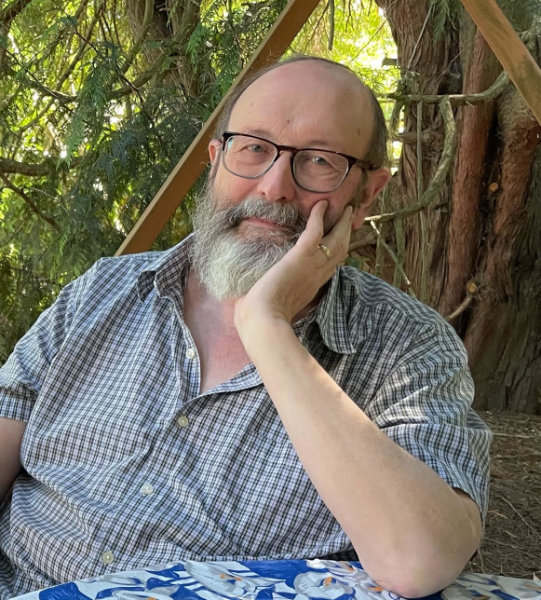
Professor Joe Felsenstein has been awarded the Mendel Medal of the Genetics Society in the UK. According to their website, “The Mendel Medal is awarded by the President of the Genetics Society, usually twice within the President’s term of office, to an individual who has made outstanding contributions to research in any field of genetics.” Professor Felsenstein is a de facto editor here at The Panda’s Thumb. The statement of the Genetics Society follows, below the fold.
Professor Joe Felsenstein was born in 1942, grew up in Philadelphia and studied as an undergraduate at the University of Wisconsin, with James F. Crow as his undergraduate mentor. He got his Ph.D. from the University of Chicago with Richard Lewontin, and was a postdoctoral fellow at the University of Edinburgh with Alan Robertson. Since 1968 he has been at the University of Washington in the Department of Genetics, and then in the Department of Genome Sciences and also in the Department of Biology. He has worked on the population genetics theory of the effects of recombination, of geographic differentiation, and of speciation. From the late 1970s on, his main focus was on methods for inferring phylogenies.
His accomplishments in that field include showing that with certain shapes of the true evolutionary tree, parsimony methods will be inconsistent, tending to infer the wrong phylogeny. He developed dynamic programming methods for fast evaluation of likelihoods for DNA sequence phylogenies. He adapted the bootstrap method of statistical inference to phylogenies, which enables assessment of the statistical support for different groups. He wrote the central paper introducing phylogenetic comparative methods to investigate whether multiple characters have evolved in a correlated way.
He has also made these and other methods widely available by organising the development and distribution of the PHYLIP package of programs for inferring phylogenies, starting in 1980 and still continuing. In 2004, he published “Inferring Phylogenies”, which reviews and explains the major methods of statistical phylogenetics. He assisted his colleagues Mary Kuhner and Jon Yamato, in applying the likelihood methods for DNA sequence phylogenies to trees of gene copies within populations (coalescent trees), to infer population parameters such as population size, mutation rate, migration rates and recombination rates. They developed the LAMARC program for coalescent inferences.
He has received a number of honors, including membership in the U.S. National Academy of Sciences, the Weldon Prize and Medal for biometry, and the Darwin-Wallace medal from the Linnean Society. He was awarded an honorary doctorate from the University of Edinburgh, and the International Prize for Biology from the Japan Society for the Promotion of Science. Since his retirement in 2017, he has been active in critiquing mathematical arguments by advocates of Intelligent Design and creationism.
Thanks to Glenn Branch for the tip.