
A philosopher reviews "The Design Inference", 2nd edition
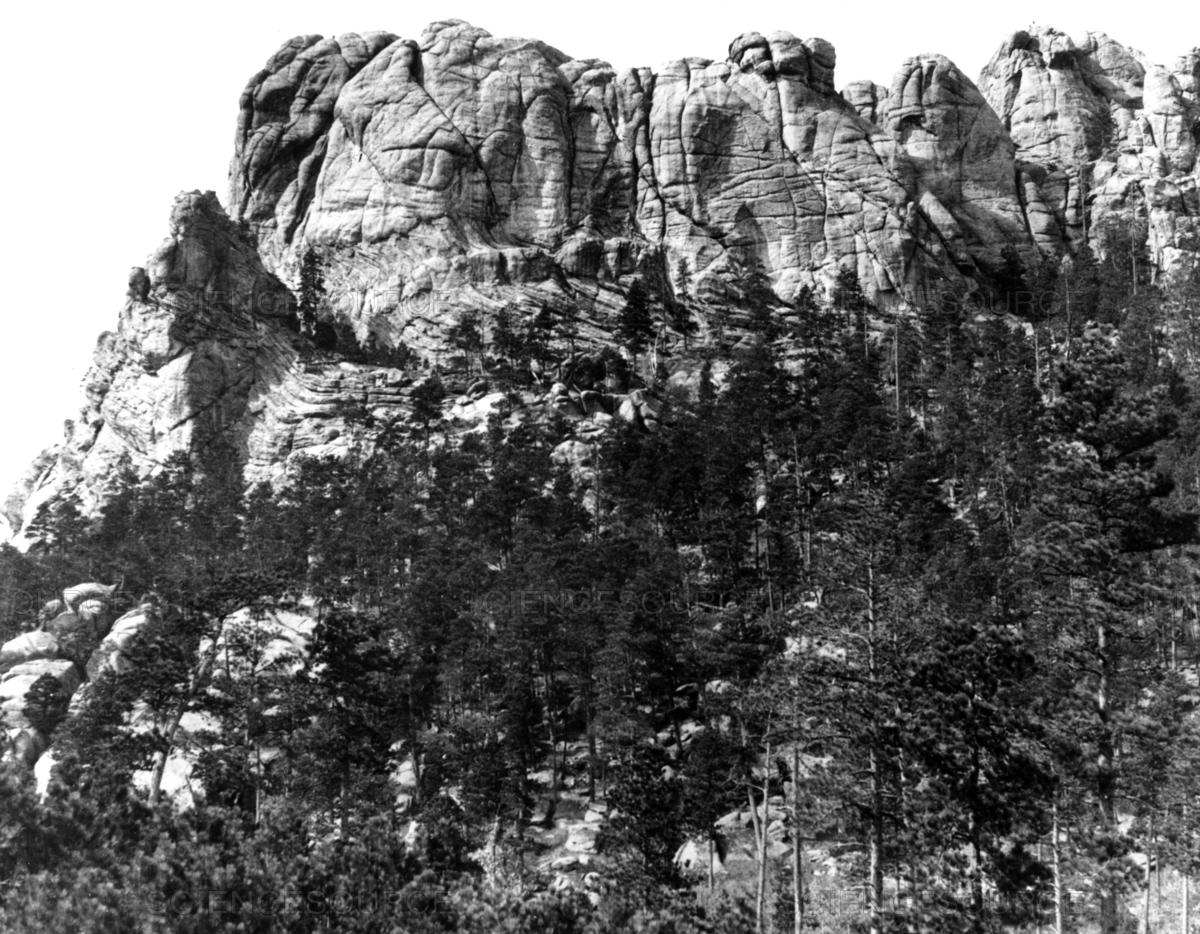
known as Mount Rushmore. From Wikimedia, public domain.
Glenn Branch has pointed out that there is now a paper in the philosophy literature reviewing William Dembski and Winston Ewert’s 2nd edition of “The Design Inference”. It is written by Joseph K. Cosgrove, a philosopher of science at Providence College.
It will be found here: Joseph K. Cosgrove. 2024. Order, organization, and randomness: on the mathematical formulation of life. Synthese 204 (6): 1-17 where there is open access.
Let me try to summarize these issues.
Cosgrove’s argument
Cosgrove’s paper concludes (correctly) that establishing that a string is described by a much shorter program does not inherently show that the string exhibits specified complexity.
Two complexities
His argument starts where Dembski and Ewert started, with Kolmogorov complexity. (We’re going to see that the words “complexity” and “complex” are going to have multiple meanings in this discussion). In Kolmogorov’s Algorithmic Information Theory, there is a number expressed in binary bits, and it can be computed by a shorter program, itself expressed in binary bits. The computation is done on a universal computer, such as a Turing Machine. (That is distinct from a Touring Car – we do not sing “Come, Geraldine, in my Turing Machine”).
The Kolmogorov Complexity of the number is the length of the program that computes it. If a number has Kolmogorov Complexity much less than its length, that indicates that it is not a random number, in the Algorithmic Information Theory sense of randomness.
Dembski and Ewert’s Algorithmic Specified Complexity (ASC) is not the Kolmogorov Complexity but the difference between the length of the number and its Kolmogorov complexity. Thus a number that is much longer than its program has high ASC. In such a case the ASC is large and the Kolmogorov Complexity is small.
Dembski and Ewert’s argument
Dembski and Ewert replace the program with a “description” of the string. In examples in their Chapter 7, section 6, they use simple phrases like “binds ATP” or “electron transport”. None of these is a computer program.
Cosgrove’s disagreement with Dembski and Ewert
Cosgrove starts with a bit string that might contain ASC, and asks whether we can recognize that. He argues that we can only determine that such a string contains ASC if we can distinguish between a random string and one which describes the target string. If the string which is doing the describing is a program, it cannot be compressed. As an incompressible string cannot be distinguished from a random string, we cannot determine whether a string contains ASC.
This argument seems tied to the idea that the “description” string is actually a program. However later in Cosgrove’s paper he dismisses Dembski and Ewert’s notion of a “description” as inadequate. A mere “description” is not a program, and cannot be used to compute anything.
My disagreement with Dembski and Ewert’s argument
I have previously reviewed Dembski and Ewert’s argument in my 2024 review(s) of the 2nd edition of The Design Inference here at PT:
and also in previous posts of mine expressing puzzlement at Dembski and Ewert’s Algoirthmic Specified Complexity criterion, here, here, and here.
In the examples in William Dembski’s “specified complexity” arguments, he attempted to define a quantity that one could compute, one that was large when we considered a well-adapted organism or well-adapted phenotype. Then there had to be an argument that this large a value could not be produced by natural selection.
Originally, in Dembski’s 2002 book “No Free Lunch: Why Specified Complexity Cannot be Purchased Without Intelligence”, this was supposed to be accomplished by his Law of Conservation of Complex Specified Information. This failed, and the LCCSI faded away and has not been heard from in years. There was an interim, about 2005, in which Complex Specified Information was a label assigned after it had been shown by unrelated means that the adaptation could not arise by natural selection.
There followed Dembski and Ewert’s Algorithmic Specified Complexity. This is explained in detail in their second edition of Dembski’s 1996 book “The Design Inference. Eliminating Chance Through Small Probabilities”. In the two-part review of the second edition of the book, linked above, and in the 2019 post here at Panda’s Thumb, I raised some questions about the use of ASC to show that anything could not evolve by natural selection.
Most importantly: how did their argument work? Was it
essential that a short program (or “description”) be able
to compute the details of the phenotype? Why? Even if it could
be shown that this was essential, was it impossible to
evolve step-by-step? Their book did not grapple with any
of these questions. Instead it spent a lot of time
complaining about Dawkins’s Weasel and about “bad design”
arguments, and other side issues.
I pointed out that they never relate ASC to fitness, let alone show that natural selection cannot achieve it. They simply leave those essential points unaddressed. In discussions of Kolmogorov Complexity, it can be argued that a long string has low probability. But the distribution being used is arbitrary, and has nothing to do with probability of being evolved by natural selection.
My worries about Cosgrove’s argument
Cosgrove also does not discuss the relation of the ASC criterion to fitness. Even if it could be shown that a short string codes for the development of a very elaborate structure, there needs to be some connection to fitness. A whale whose genotype makes it grow up to look exactly like a sequoia tree will not be well-adapted. But it will have lots of D&E’s ASC.
Bringing fitness in does enable us to show that a string has functional information. Cosgrove does not get into that. As far as I can tell, any argument like Dembski’s, or Dembski and Ewert’s, must bring in fitness or fit adaptations at some point.
I hope that Cosgrove, and/or Dembski or Ewert, can make comments here explaining why my concerns are misguided.